
Pump On or Pump Off? How Birmingham Pool Owners Can Tell a Suction Leak From a Return Line Leak
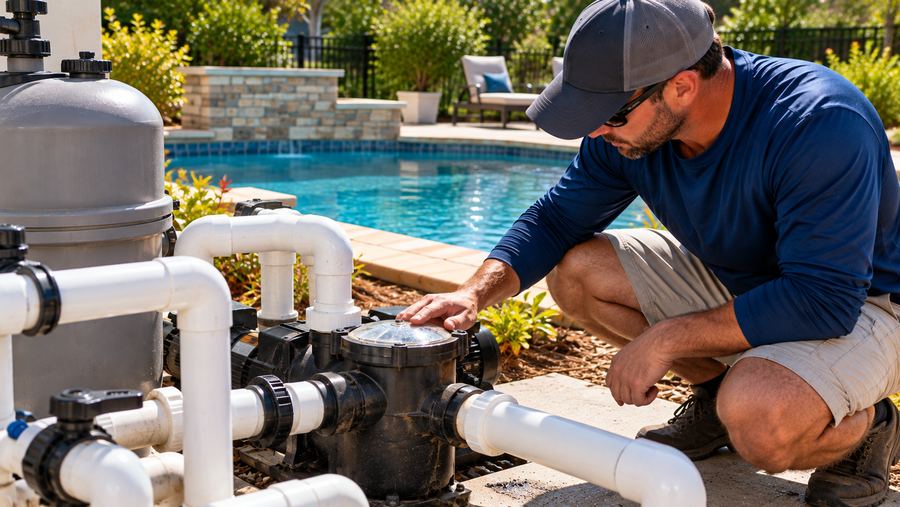

A suction side pool leak in Birmingham can fool even careful pool owners. The pool drops overnight, yet the equipment looks fine and the yard stays dry. Meanwhile, the water bill keeps creeping up.
At Pool Leak Rescue, we hear the same question on almost every call: is it a leak or just the Alabama heat? The answer often comes from one simple observation. Does your pool lose more water with the pump on, or with the pump off?
That single clue tells us which half of your plumbing to suspect. This guide explains how suction and return lines differ, how to run the test yourself, and what the results mean for homeowners in Birmingham, Cullman, and Tuscaloosa.
Suction Side vs. Return Side: How Your Pool Plumbing Works
Every pool runs on a loop. Water leaves through the skimmers and main drain, travels to the pump and filter, then flows back through the return jets. Each half of that loop behaves differently when something cracks.
The Suction Side
The suction side includes the skimmer lines and main drain line leading to the pump. While the pump runs, these lines are under vacuum. As a result, a crack pulls air into the system instead of pushing water out.
Once the pump shuts off, that vacuum disappears. Water in the lines then sits under the weight of the pool, so it can seep out through the same crack. That is why suction leaks often show up overnight.
The Return Side
The return side carries filtered water back to the pool. These lines are pressurized whenever the pump is running. Consequently, a crack in a return line forces water out into the soil every time the system cycles.
When the pump rests, return line pressure drops. The leak slows down or stops, so the pool may hold steady for hours.
How to Run the Pump On, Pump Off Test
You only need a bucket, a strip of tape, and two days of normal weather. Skip any stretch with heavy rain, since rainfall throws off the numbers.
- Day one, pump on. Set a bucket of pool water on the top step and mark both water levels. Run the pump on its normal schedule for 24 hours, then compare the drops.
- Day two, pump off. Reset the marks and leave the pump off for a full 24 hours. Then compare the drops again.
- Write everything down. Note each result in inches, plus the weather. Those notes help our technicians narrow the search faster.
Reading Your Results
The bucket shows normal evaporation. So any extra loss in the pool points to a leak.
- More loss with the pump off: suspect the suction side, including skimmer and main drain lines.
- More loss with the pump on: suspect a return line or another pressurized fitting.
- The same loss either way: the shell, a fitting, or the pool light is more likely.
One test won't pinpoint a leak, but it tells us where to start. That alone can shorten the detection visit.
Warning Signs of Each Leak Type
The bucket test is your strongest clue. However, your equipment often drops hints of its own.
Signs of a Suction Side Leak
- Air bubbles collecting in the pump basket lid
- The pump losing prime or running noisy after startup
- Bubbles blowing out of the return jets
- The water level stopping at the skimmer opening
Here is something our technicians see often. A homeowner swaps the pump lid gasket twice, yet the bubbles keep coming. When a new gasket doesn't fix the air, the crack is usually further down the line.
Signs of a Return Line Leak
- Soggy grass or a wet spot between the equipment pad and the pool
- Settling pavers or new cracks along the deck
- Weaker flow from one return jet than the others
- Faster water loss during long filter cycles
Return leaks also tend to get worse in summer. For example, Birmingham owners often run pumps longer during hot months, and every extra hour pushes more water into the ground.
What Happens After the Test
Your bucket results narrow the search. From there, our job is to find the exact spot without tearing up your backyard.
Pinpointing the Leak
First, we isolate and pressure test each plumbing line. A line that won't hold pressure confirms which run has failed. Next, we use electronic listening equipment along that line to locate the break underground.
We also dye test the skimmers, main drain, returns, and light niche. Combining these methods lets us mark the leak to a specific spot rather than a general area.
Repairing the Line
Fittings and skimmer throat leaks can often be repaired at the pool wall. Underground breaks are a different story. For those, Pool Leak Rescue offers trenchless pipe repair, which fixes many damaged lines with minimal digging.
Before any work begins, we walk you through what we found and what the repair involves. That way, you can make the decision with the full picture in hand.
Suction and Return Leak FAQ
Why does my pool lose more water when the pump is off?
When the pump is off, suction lines are no longer under vacuum. Water in those lines can then seep out through a crack. That pattern usually points to a leak in a skimmer line or the main drain line.
Why does my pool lose more water when the pump is running?
Return lines are pressurized whenever the pump runs. A crack in one of those lines pushes water into the soil during every cycle. More loss with the pump on usually points to the return side.
What causes air bubbles in my pump basket?
Air in the pump basket often means the suction side is pulling air through a leak. A worn lid gasket or loose fitting near the pump can also cause it. If replacing the gasket doesn't help, the leak may be underground.
Can I find a suction leak myself?
The pump on, pump off test can tell you which side to suspect. However, locating the exact break usually requires pressure testing and electronic listening equipment. A professional leak detection visit saves a lot of guesswork.
Does Pool Leak Rescue serve areas outside Birmingham?
Yes. Pool Leak Rescue provides pool leak detection and repair in Birmingham, Cullman, Tuscaloosa, and surrounding communities. Call to confirm availability for your address.
Book a Leak Detection Consultation
A pool that drops more on one schedule than the other is already telling you something. Rather than topping it off every few days, let the pattern guide the fix. The earlier a plumbing leak is found, the less water and soil it washes away.
Pool Leak Rescue helps homeowners across Birmingham find and repair suction and return line leaks with minimal disruption. Book a consultation today, and bring your bucket test notes along.
Discover More Blog Posts
Explore our collection of informative and engaging blog posts.

Ready for a Leak-Free Pool Experience?
Contact Leak Rescue today for professional and reliable pool care services. Whether it’s detection, repair, or renovations, we ensure your pool remains a source of joy and relaxation.
