
Commercial Pool Leak Detection in Cullman County: What Property Managers Need to Know
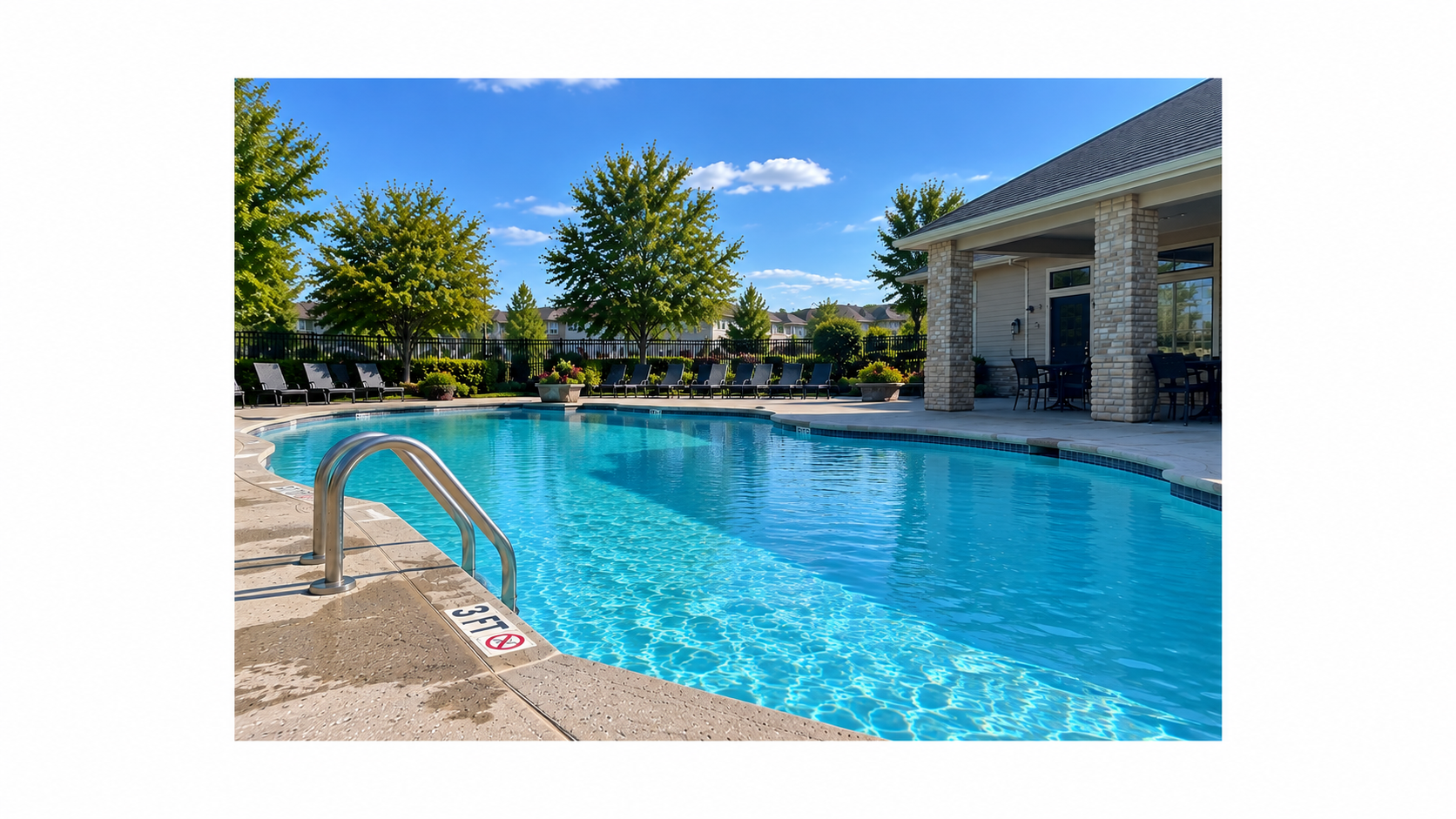

Managing a commercial pool comes with a different set of responsibilities than taking care of a backyard pool. When the water level starts dropping, there are more people involved, more equipment to consider, and often a much larger volume of water being lost.
For property managers in Cullman County, a suspected pool leak is something worth investigating early. A small plumbing leak or crack might seem manageable at first, especially when the pool still looks normal. Given enough time, though, water loss can affect operating costs, surrounding soil, pool equipment, and the areas around the pool.
Pool Leak Rescue provides pool leak detection in Cullman County and the surrounding area, helping property managers determine whether unexplained water loss is coming from normal evaporation or an actual leak.
Knowing what to watch for and what happens during commercial pool leak detection makes the process easier to manage.
Commercial Pools Lose Water for Plenty of Reasons
Every swimming pool loses some water naturally. Evaporation happens every day, especially during periods of hot weather, low humidity, wind, and heavy sun exposure.
Commercial pools also deal with water loss from swimmers. People climb out of the pool carrying water on their bodies and swimsuits. Kids splash. Deck areas get washed down. Filters get backwashed. Staff members sometimes add fresh water without giving much thought to how often they are doing so.
Those routine losses make leaks harder to recognize.
A maintenance employee might top off the pool every morning because the water looks a little low. After a few weeks, adding water becomes part of the routine. No one stops to ask why the pool suddenly needs more water than before.
This is one reason commercial pool leaks sometimes continue longer than residential leaks. Several people might be responsible for maintenance, but no single person is tracking the overall pattern.
How Do You Know If a Commercial Pool Has a Leak?
The first sign is often a change in water usage.
If staff members are adding significantly more water than usual without an obvious explanation, the pool deserves a closer look.
Property managers should also pay attention to:
• A water level that drops consistently overnight
• Automatic fill equipment running more often
• Unexplained increases in water bills
• Wet or unusually soft areas around the pool deck
• Cracks around fittings, skimmers, or the pool structure
• Air entering the circulation system
• Difficulty maintaining proper water chemistry
• Pool equipment losing prime
• Water appearing in areas where the ground is normally dry
• Changes in the surrounding deck or soil
One symptom alone does not always confirm a leak. Several occurring together make professional testing more worthwhile.
A simple question often helps: Has anything about the way this pool is being used changed enough to explain the extra water?
If the answer is no, there might be another source of water loss.
Why Commercial Pool Leaks Need Attention Early
A leaking commercial pool is rarely limited to the cost of replacing lost water.
Every gallon leaving the pool goes somewhere.
If water escapes through underground plumbing, for example, the surrounding soil stays wetter than normal. Depending on the location and severity of the leak, continued water movement can affect soil beneath decks, walkways, equipment areas, or nearby structures.
Leaks can also create problems with pool chemistry. Fresh water added to replace lost water changes the chemical balance of the pool. Staff might find themselves using more chemicals while struggling to understand why chlorine, salt, stabilizer, or other readings keep changing.
Heating costs can increase too. If heated pool water leaves the system and is constantly replaced with cooler water, the heater has more work to do.
For a property manager, this creates an operating problem rather than a simple maintenance issue.
Automatic Fill Systems Can Hide Commercial Pool Leaks
Automatic water levelers are convenient, but they also make leaks easy to overlook.
Without an automatic fill system, someone notices when the waterline falls. With one, fresh water enters the pool whenever the level drops below a set point.
From the deck, everything looks normal.
The water stays at the proper height while the leak continues.
Property managers might first notice the issue when reviewing a water bill or hearing from maintenance staff about unusual chemical use.
If your commercial pool has an automatic fill system, periodically tracking how frequently the system operates is useful. A noticeable increase without a corresponding change in weather or pool use deserves attention.
Where Do Commercial Pools Commonly Leak?
A commercial swimming pool has many possible leak points, and the visible portion of the pool represents only part of the system.
Leaks sometimes develop around skimmers, return fittings, drains, lights, or other penetrations through the pool shell. Cracks in the pool structure or problems around joints can also allow water to escape.
Plumbing adds another layer.
Pipes running underground carry water between the pool and the equipment area. A damaged fitting, connection, or section of pipe might leak without producing an obvious puddle above ground.
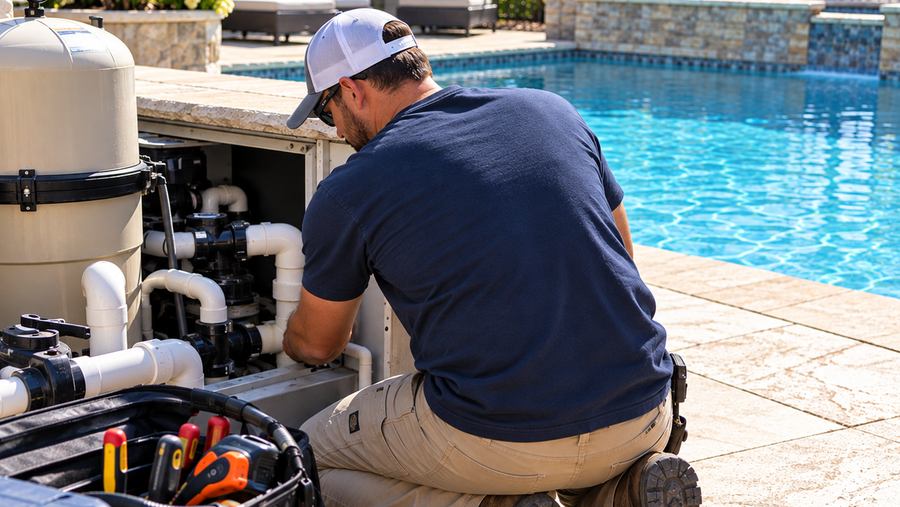
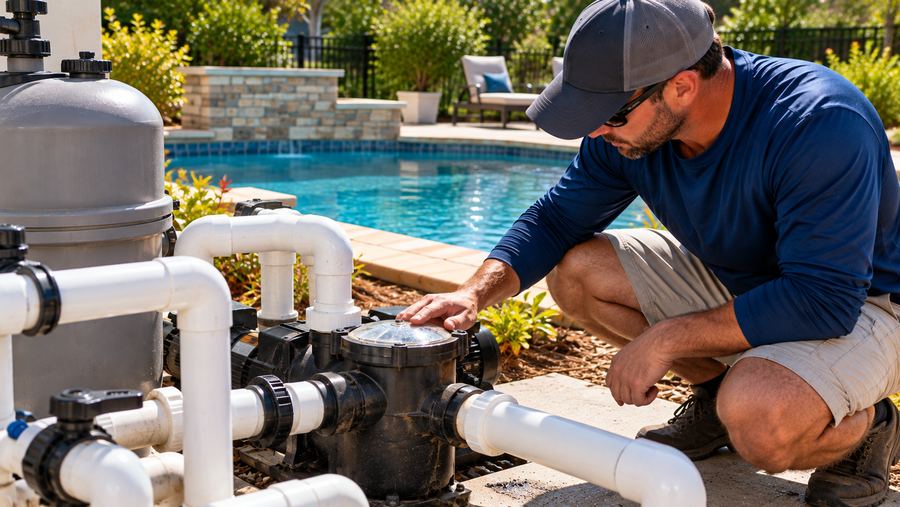
Equipment areas should be checked as well. Pumps, filters, valves, heaters, and connecting plumbing sometimes develop leaks that are easier to see but still go unnoticed if equipment is located away from the main pool area.
The source matters because the repair approach depends on what is leaking.
Finding the location first prevents unnecessary repair work.
What Happens During Commercial Pool Leak Detection?
Commercial pool leak detection is a process of narrowing down possible sources of water loss.
The technician starts by learning what the property manager or maintenance staff has observed. Details such as how quickly the water drops, whether the loss changes when equipment runs, and when the problem started provide useful clues.
The pool and equipment are then inspected for visible signs of trouble.
Testing methods depend on the pool and suspected leak location. Pressure testing can help evaluate plumbing lines for water loss. Dye testing is often useful around fittings, cracks, skimmers, lights, and other areas where water might be escaping.
Specialized listening equipment can also help locate certain underground plumbing leaks by identifying sounds associated with escaping water.
The goal is not simply to confirm that a leak exists. A useful leak detection service should narrow down where the problem is occurring so the property manager has better information before deciding what happens next.
Why Guessing at the Leak Location Gets Expensive
When a commercial pool loses water, there is often pressure to solve the problem quickly. That sometimes leads to repairs based on assumptions.
A wet area beside the deck might seem to point directly toward a leaking pipe underneath it. Water does not always behave so neatly underground.
Escaping water can travel through soil, along pipes, or through gaps before becoming visible somewhere else.
Opening a deck based only on where moisture appears can result in unnecessary work.
The same applies to replacing equipment or sealing visible cracks without testing other parts of the pool.
Commercial pool leak detection is valuable because it narrows the search before disruptive repairs begin.
For apartment communities, hotels, fitness facilities, community associations, and other properties, reducing unnecessary deck removal also reduces disruption around the pool.
Keep Records Before the Leak Detection Appointment
Property managers can make the diagnostic process easier by gathering a few details beforehand.
Start with recent water bills if they are available. A noticeable increase compared with similar months from the previous year might help establish when the problem became significant.
Ask maintenance staff how often they are adding water and whether the frequency has changed.
Record the pool water level at the same time each day for several days. Note whether the circulation system was operating and whether the pool was heavily used.
Recent repairs are worth mentioning too. If plumbing, equipment, resurfacing, deck work, or other pool repairs occurred shortly before the water loss began, the technician should know.
These details help build a clearer picture of what has been happening.
Commercial Pool Leaks During the Busy Season
A leak does not always appear at a convenient time.
For apartment communities and other properties in Cullman County, problems often become noticeable while the pool is receiving regular use. Closing the entire pool for an extended investigation is rarely anyone's first choice.
This makes early detection especially useful.
A slow leak identified before it becomes severe gives a property manager more information and often more flexibility when coordinating repairs.
Waiting until water loss becomes difficult to manage can create more pressure on everyone involved.
How Much Water Loss Is Too Much?
There is no single amount of daily water loss that proves every pool has a leak. Weather, pool size, wind exposure, temperature, humidity, swimmer activity, and water features all influence evaporation.
The pattern matters.
A pool that has historically needed water once or twice a week and suddenly requires significant refilling every day has changed.
That change deserves investigation even if the pool still looks fine.
Comparing current water use with the property's normal baseline is often more useful than relying on a universal rule.
What Property Managers Should Do When They Suspect a Leak
Avoid making major repair decisions until the source of the water loss has been narrowed down.
Document what staff members are seeing. Check visible equipment and plumbing. Review recent water usage. Pay attention to the surrounding deck and grounds.
If the water loss continues without a clear explanation, schedule professional pool leak detection.
A commercial property has enough moving parts without replacing pipes, opening decks, or repairing pool surfaces based on a guess.
Frequently Asked Questions About Commercial Pool Leak Detection in Cullman County
How do I tell the difference between evaporation and a commercial pool leak?
Look for a change from the pool's normal water loss pattern. Weather and swimmer activity affect evaporation, so daily water loss varies. Consistent unexplained drops, frequent refilling, increased water bills, or automatic fill equipment running more often are reasons to investigate further.
Should I shut down the pool if I think there is a leak?
Not every suspected leak requires an immediate shutdown. The right response depends on the amount of water being lost, where the leak is located, and whether the problem creates a safety or equipment concern. A leak detection professional can help identify the source so the property manager has better information for the next decision.
Can a commercial pool leak be underground?
Yes. Pool circulation plumbing often runs beneath decks or through surrounding soil. A damaged underground line might leak without producing an obvious surface puddle.
Does a high water bill mean my commercial pool is leaking?
Not necessarily. Increased pool use, irrigation, cleaning, or other property operations can raise water consumption. If the increase corresponds with frequent pool refilling or unexplained water loss, the pool should be checked as a possible source.
Can a pool leak affect water chemistry?
Yes. When leaking water is repeatedly replaced with fresh water, chemical concentrations change. Staff might notice that maintaining normal readings requires more frequent adjustments than usual.
What types of commercial properties need pool leak detection?
Leak detection is relevant for apartment and condominium communities, hotels, community associations, fitness facilities, recreation centers, clubs, and other properties operating swimming pools. Any commercial pool showing unexplained water loss should be evaluated.
Getting a Clear Answer About Commercial Pool Water Loss
A commercial pool does not need to be losing a dramatic amount of water before a leak deserves attention. A change in the pool's normal behavior is often the first useful clue.
For property managers in Cullman County, tracking water use, listening to maintenance staff, and investigating unexplained changes early can prevent weeks of unnecessary water loss and guesswork.
Pool Leak Rescue helps commercial property managers identify where pool water is going and narrow down the source before repairs begin. If your Cullman County property has a pool that needs more water than usual, contact Pool Leak Rescue to schedule commercial pool leak detection and get a clearer picture of what is happening.
Discover More Blog Posts
Explore our collection of informative and engaging blog posts.
Ready for a Leak-Free Pool Experience?
Contact Leak Rescue today for professional and reliable pool care services. Whether it’s detection, repair, or renovations, we ensure your pool remains a source of joy and relaxation.
